Fani-Kayode Backs Obasanjo Over Nigeria Airways Liquidation
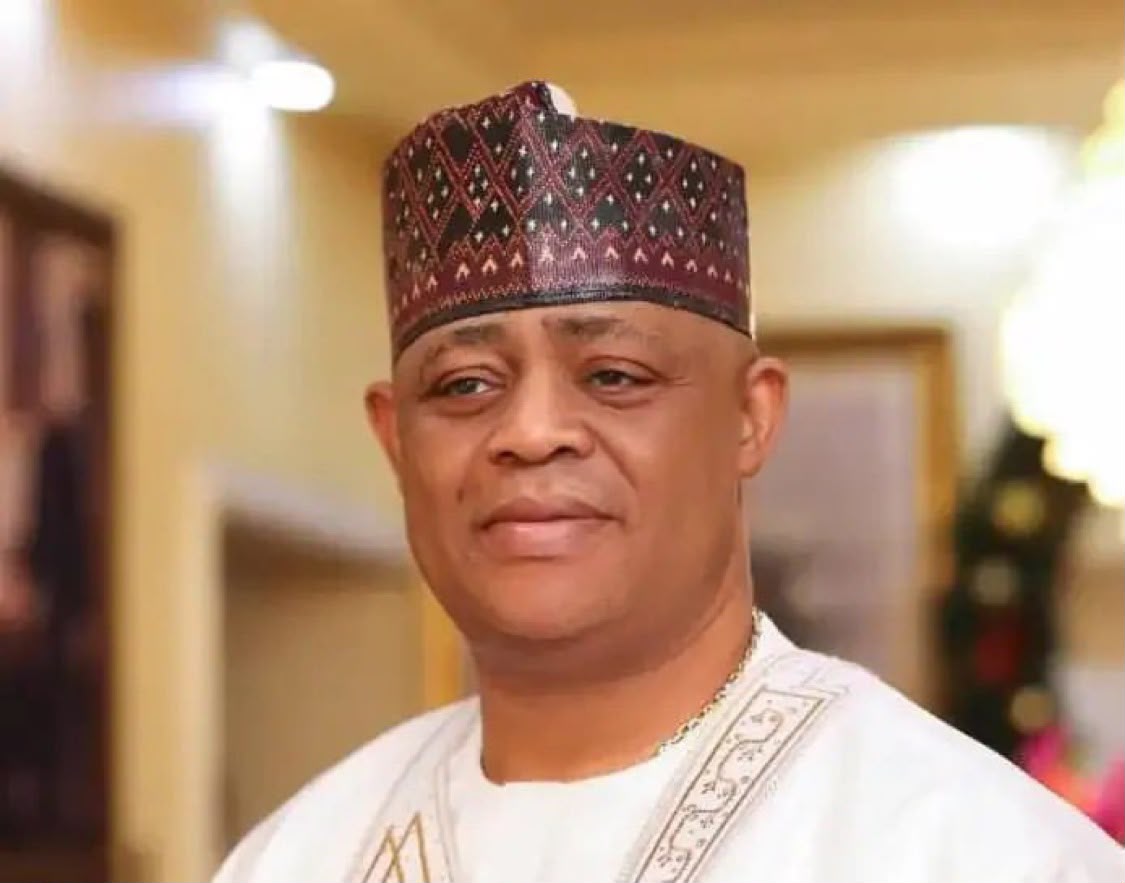
Former Minister of Aviation, Femi Fani-Kayode, has defended former President Olusegun Obasanjo’s decision to liquidate Nigeria Airways in 2004, blaming decades of corruption, mismanagement and financial difficulties for the airline’s eventual collapse.
Fani -Kayode argued that the national carrier was already in a state of near-total collapse when Obasanjo returned to power in 1999, leaving the former president with little alternative but to shut down its operations.
He made the clarification in a post on his X account on Thursday amid an exchange between Minister of Aviation and Aerospace Development, Festus Keyamo, and former Vice-President Atiku Abubakar over Nigeria’s economic challenges and insecurity.
Keyamo had criticised Atiku for allegedly distancing himself from controversial decisions taken by the administration of which he was vice-president while taking credit for its achievements.
The minister specifically cited the liquidation of Nigeria Airways in September 2004, saying the decision left thousands of workers without jobs and deprived them of their pensions and gratuities for years.
He also disclosed that President Bola Tinubu had approved and released N36bn to settle the outstanding obligations, adding that beneficiaries had begun receiving payment alerts.
According to Keyamo, some former employees died before receiving their entitlements, while others waited for years for the government to fulfil its obligations.
In his response, Fani-Kayode maintained that Obasanjo should not be held solely responsible for the airline’s demise, noting that its decline predated the former president’s return to civilian rule.
“In fairness to President Obasanjo the Nigeria Airways ‘mess’, as you have described it, was established before he came back to power in 1999.
“And it was indeed a mess but it was not of Obasanjo’s making!
He met it there after he was sworn in and what he found broke his heart,” Fani-Kayode wrote.
He contrasted the airline’s condition when Obasanjo left office as military Head of State in 1979 with its state of affairs two decades later.
According to the former minister, Nigeria Airways had 32 operational aircraft in 1979, supported by skilled pilots and crew, competent management and an accountable board. He described the carrier at the time as “the pride of the nation”.
However, he said the airline had deteriorated significantly by 1999, when Obasanjo became president, with its aircraft and other assets largely gone.
“By the time Obasanjo came back to power in 1999, 20 years later, there was only one plane left and it was not functional.
“The rest had vanished together with virtually all of the company’s assets,” he said.
Fani-Kayode attributed the airline’s decline between 1979 and 1999 to successive management teams and boards, accusing them of corruption and poor administration.
He explained that the decision to liquidate the company followed years of financial insolvency and operational failure, alongside unsuccessful efforts to restore its viability.
READ ALSO: We need Nigeria with equal rights for all or no Nigeria —Fani-Kayode
He also recalled that the International Finance Corporation had advised on privatising the airline but subsequently withdrew from the process.
Against this background, Fani-Kayode said the Obasanjo administration was justified in ending government support for the struggling carrier.
“This is why Obasanjo liquidated it in 2004 and I believe that he had no choice,” he said.
“There was nothing left to save even though it was a painful decision given the fact that he was one of those that had done so much for that company when he was Military Head of State.”
The former aviation minister also recounted efforts to address the unpaid pensions and other entitlements owed to the airline’s former employees after its liquidation.
He said a committee headed by the then Head of Service of the Federation, Yayale Ahmed, recommended the release of funds to settle the outstanding payments.
In 2006, Fani-Kayode said he submitted a memo to the Federal Executive Council seeking approval for the payment of the entitlements. However, the proposal was rejected after some cabinet members argued that former management teams and board members who contributed to the airline’s destruction should not receive pensions.
“I did not share that view but sadly I and those that supported me were in a minority and we lost the debate,” he said.
He added that the issue was subsequently addressed under the administration of the late President Umaru Yar’Adua, which paid most of the affected pensioners. The administration of former President Muhammadu Buhari also made payments towards settling the obligations.
Fani-Kayode praised Keyamo for ensuring that the remaining outstanding entitlements were paid under Tinubu’s government, describing the settlement as a long-overdue step towards addressing the suffering of former workers.
“It is gratifying that under your leadership the remainder of the pensions have been paid. I only wish we had done that when we were in office,” he wrote.
“The pensioners suffered immensely over the years. I have always maintained that paying them was the right thing to do.”
He also alluded to Atiku’s position during the Federal Executive Council discussions on the pension payments but said he would not publicly disclose the former vice-president’s stance.
“As for His Excellency Waziri @atiku I know what side of the divide he was during that debate in council but I will not share that publicly because whatever decision was finally taken was a collective one,” he said.
Fani-Kayode stressed that the decision was ultimately a collective responsibility of the administration and that its members shared responsibility for the outcome.
He concluded by commending Keyamo for overseeing the settlement of the remaining pension obligations owed to former Nigeria Airways employees.
Post navigation
Leave a Reply Cancel reply
Your email address will not be published. Required fields are marked *
Comment *
Name *
Email *
Website
Save my name, email, and website in this browser for the next time I comment.
Δ
This site uses Akismet to reduce spam. Learn how your comment data is processed.