After US accuses Fijian of corruption for China, experts warn of region-wide network
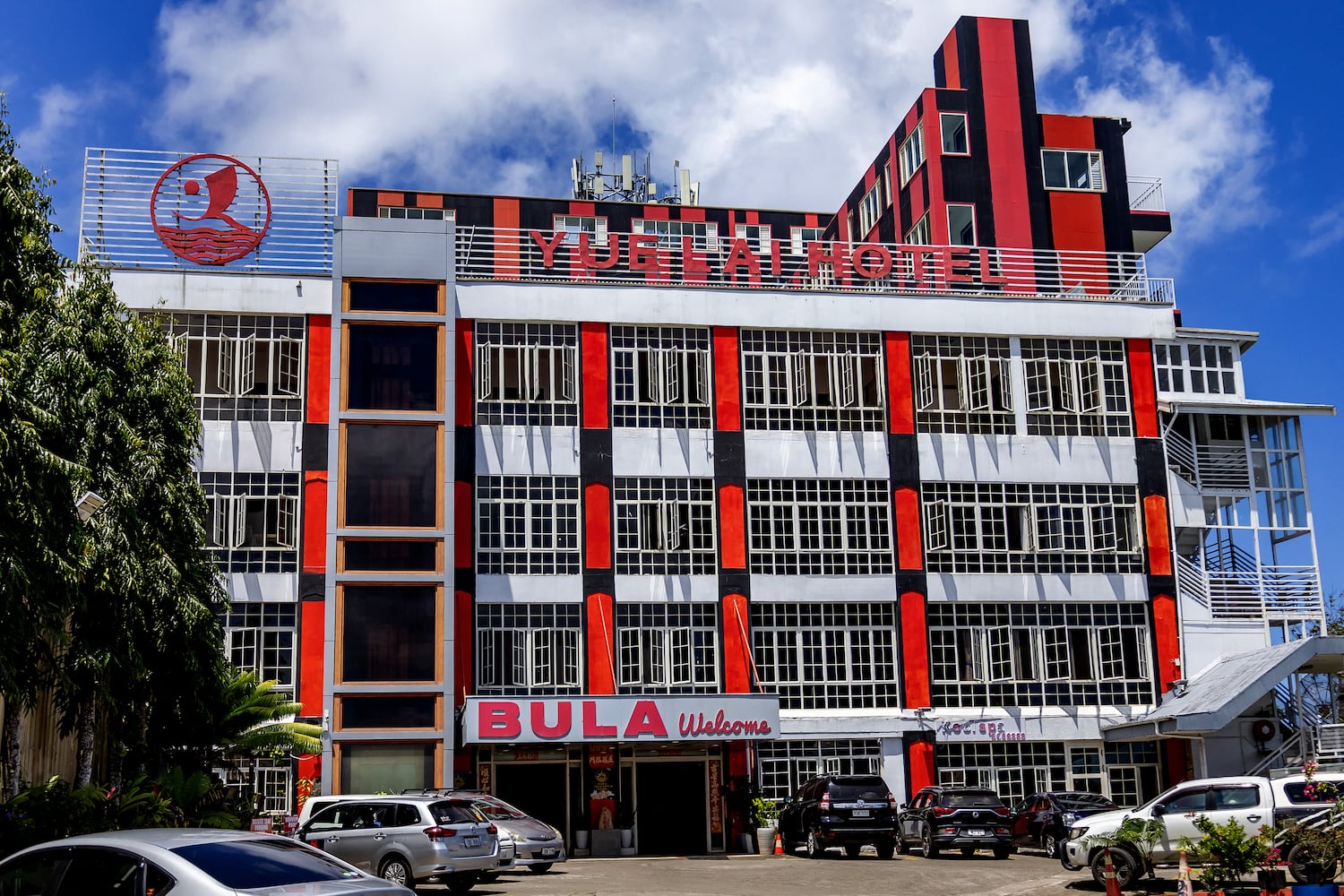
Beijing’s corruption and influence operations are not limited to Fiji, and similar operations likely exist in other Pacific island countries, experts on the region told Radio Free Asia.
The analysis came shortly after Washington accused Fijian national Zhao Fugang of corruption as head of the Overseas Chinese Service Center in Suva.
“Zhao abused his public position by paying bribes to Fijian citizens to advance China-based government, business, and criminal interests,” U.S. State Department spokesman Thomas Pigott said in a statement. “His actions constituted significant corruption and adversely affected U.S. interests in Fiji.”
Though Zhao is now barred from entering the United States, there are probably more people involved in the type of corruption he is accused of – not just in Fiji, but across the entire Pacific region, Gregory Brown, executive director of the Washington-based Alliance Futures Initiative think tank, told RFA.
“I seriously doubt that Beijing set up a corruption and influence operation in Fiji and then decided not to replicate it anywhere else in a region where it’s spending billions on infrastructure, signing security agreements, and competing every day for political influence,” said Brown. “That defies logic and everything we know about the CCP’s overseas influence campaigns. There is no reason similar operations wouldn’t work in Honiara, Port Moresby, Nuku’alofa, or Port Vila.”
A map of Fiji. (AFP) Illicit activities that advance Chinese interests occur elsewhere in the Pacific, Kathryn Paik, deputy director of the Australia Chair at the Washington-based Center for Strategic and International Studies, told RFA.
“There have been many documented cases of Chinese actors in other Pacific countries and territories conducting illegal activities such as drug trafficking, illegal fishing, money laundering, and more,” said Paik. “What is key is that while most if not all of these actors may not be an official Chinese agent, they are conducting activity that is either encouraged by or facilitated by Beijing.”
Illicit disruptors
Zhao is an example of China’s use of “state-condoned illicit disruptors as a form of gray zone activity in the Pacific,” José Sousa-Santos, of the University of Canterbury in New Zealand, wrote in an essay published in Small Wars Journal , a project by the Future Security Initiative at Arizona State University.
Written months before the U.S. sanctioned Zhao – who Australian law enforcement had already identified as having connections to organized crime – the essay detailed how Beijing tolerates and protects criminal figures and networks to serve objectives of the state.
“This does not require a simple command relationship between the Chinese state and organized crime. Nor does it mean that every Chinese criminal actor abroad is an agent of Beijing,” wrote Sousa-Santos. “The more important point is that certain illicit actors can become strategically useful when they extend influence, cultivate local elites, generate deniable economic leverage, support patriotic narratives, and operate in spaces where formal state power would attract resistance.”
Actors like Zhao are valuable in that Beijing can deny all connections of involvement in their illegal activities, all while benefiting from them, the essay said.
“Zhao’s value is that he represents the kind of high-risk intermediary who can move money, cultivate elites, open doors, normalize Chinese influence, and generate dependency while remaining formally outside the state,” it said.
After the U.S. sanctioned Zhao, Chinese Foreign Ministry spokesperson Mao Ning told a news conference she had no knowledge of his case.
“We oppose vilification and smears against China,” she said.
Cooperation needed
In a Facebook post, the Fijian government asked Washington to provide evidence of the allegations against Zhao, and affirmed Suva’s commitment to work with international partners to crack down on transnational crime.
The U.S. and its allies should coordinate with each other to stop illicit activities, Paik said.
“Working collaboratively to identify illegal activity and name specific actors is certainly a start,” she said. “But of course Pacific countries are sovereign nations and the next step will ideally be to take action against these individuals in whichever country they are acting.”
Brown said that the U.S. should not stop with its sanctions on Zhao, but should name other individuals in the region to demonstrate how widespread the problem is.
“If we see three or four more across different Pacific countries in the next six months, the signal becomes a pattern,” he said.
Brown also called for the U.S. and its allies to support Pacific governments in building their own anti-corruption and counter-intelligence capacity, urged Pacific governments to make foreign-linked community organizations more accountable by requiring them to register, and work together to protect Chinese diaspora communities in the region.
“My big question now is whether this designation is a one-off or a campaign,” he said. “If it’s a one-off, Beijing will absorb the hit and move on. If it’s a campaign, it’s a chance to change calculus for every Chinese operative and every compromised Pacific official in the region.”
Edited by Charlie Dharapak.
The full article is being collected. Available text is shown for now.
Source: Radio Free Asia (RFA) - Myanmar Service ↗