Sumner drafts ordinance to regulate camper and recreational vehicle rentals
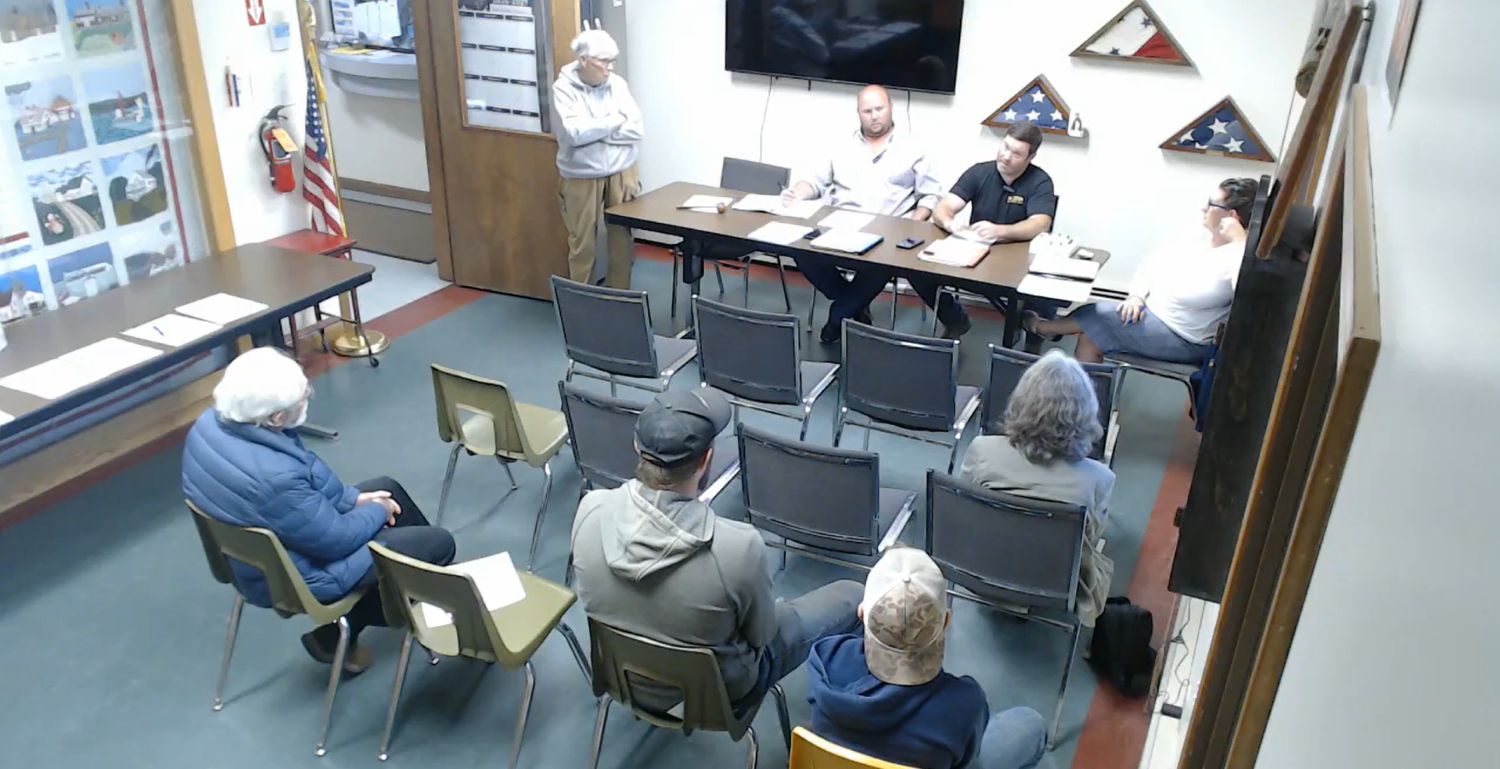
Sumner town officials and residents during a Sept. 22 special town meeting. (Screenshot/YouTube)
SUMNER — Sumner officials took steps Tuesday toward creating an ordinance to regulate recreational vehicles and campers, focusing primarily on their use as rental housing.
At a joint Board of Selectmen and Planning Board meeting, Selectman Jeffrey Coombe said an ordinance would align the town with state laws regarding occupancy and safety. Town Clerk Diane Campbell told Monitor Local that people in one or two locations in town are living in campers and relying on unsafe heating sources during extreme cold. While the issue is not widespread, she said, multiple campers are involved.
During a spring Planning Board meeting, member Marcia Turcotte highlighted a local property where people are apparently using up to four campers for long-term housing. She cited safety hazards, including overloaded extension cords and liquid leaking into the street.
Campbell said Code Enforcement Officer Calvin Beaumier struggles to address these violations without an official ordinance.
Beaumier detailed several health and safety hazards he has observed or heard about from residents. The risks include fire hazards from snow-covered extension cords and overworked recreational vehicle heaters unequipped for continuous single-digit temperatures.
Beaumier also noted that unvented space heaters emit hazardous indoor air pollutants, while some occupants dump raw sewage directly onto the ground or into nearby streams.
Sewage disposal represents the biggest violation affecting local residents, Board of Selectmen member Joel Chapman said.
During short-term use, such as a weekend trip, a camper’s small, self-contained waste tank typically drains into the owner’s home septic system at the end of the trip.
However, when someone uses a camper as long-term rental housing, the volume of waste quickly overwhelms a standard residential septic system designed for a single household.
The result, Chapman said, is “raw sewage going who knows where.”
Board members discussed different mechanisms for sewage disposal depending on length of occupancy.
Planning Board Chair Nick Interbartolo restated the Board of Selectmen’s developing guidance:
For rentals lasting seven to 120 days, the town could require owners to provide proof of proper waste disposal, such as receipts from commercial dumping stations.
For occupancy exceeding 120 days, campers require an appropriately sized waste disposal system. Property owners — not renters — must install the system.
The boards discussed exceptions, such as families living in a camper while rebuilding a home destroyed by fire.
To address other safety concerns, the Planning Board said it would develop a compliance checklist, including requirements for smoke detectors, carbon monoxide monitors, and fire extinguishers. Owners seeking to rent their campers would need an occupancy permit verifying compliance with the checklist. Beaumier recommended requiring annual renewals of the health and safety inspection.
Beaumier also noted resident concerns regarding tax fairness, specifically long-term renters with school-age children who do not contribute directly to local school funding through property taxes. One Planning Board member pointed out that property owners still pay taxes on the land beneath the campers.
The boards also grappled with defining the threshold between campers and permanent structures, discussing physical characteristics like square footage and additions such as decks or skirting. However, the Board of Selectmen indicated it would not include those considerations in the ordinance at this time.
Campbell noted that under existing town rules, most properties are already subject to taxes — either through real estate property tax or vehicle excise tax. These unresolved details led the boards to consider broader questions, including how to define and verify long-term occupancy.
Many of those questions are difficult to answer — “like nailing Jell-O to the wall,” Beaumier said. The Planning Board has been consulting camper ordinances in other Maine towns, including Sidney and Union, for guidance.
Throughout the discussion, board members emphasized that the ordinance focuses primarily on rentals. The proposed rules would likely not affect stored or abandoned campers, or those used solely by their owners. Campbell noted that some campers may already fall under existing regulations, such as the shoreland zoning ordinance or state junkyard statutes.
The Planning Board has been working to draft a camper ordinance since the Board of Selectmen identified it as a priority during a joint meeting July 7 . Discussions are expected to continue at the Planning Board’s next meeting, scheduled for 6 p.m. Tuesday, Oct. 20.
Marna Miller is a Community Reporting Fellow receiving training through the Journalism New England Career Lab to do civic reporting that provides people in towns across New England with the information they need to be engaged in their community.
The full article is being collected. Available text is shown for now.