WineInk: A tip for tasting
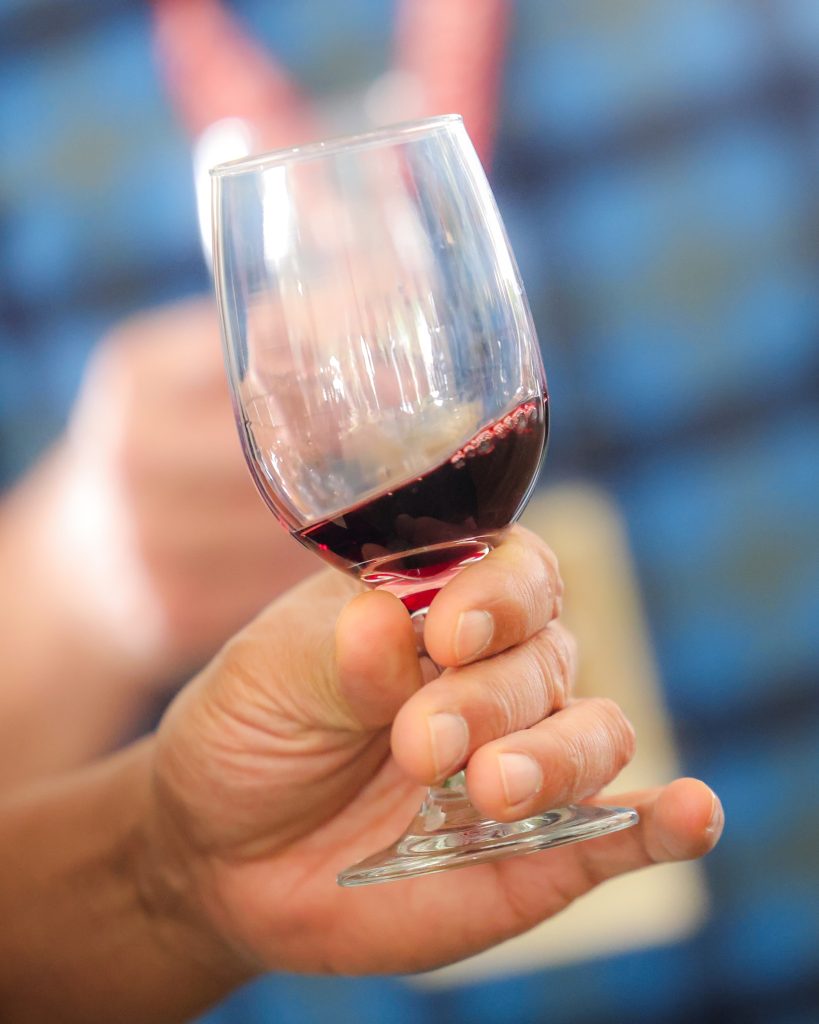
We’ve all been there.
You’re at a restaurant with friends. You’ve ordered a bottle of wine for the table, and the sommelier approaches and asks, “Who would like to taste the wine?” Since you’ve ordered it, all eyes turn toward you as you nod your head, indicating you’ll assume the honor. The somm pours a sip into your glass, and now you have the responsibility of approving — or disapproving — the bottle for the table.
It’s not that hard. Take a good look at the wine and, unless you see some obvious flaw like a fly in the glass, give it a good swirl. Take a healthy sniff, and if it smells like wine and not like a wet cardboard box or a bottle of nail polish, then take a sip. Roll it around in your mouth for a moment, and gather in the flavors. Consider if the wine is fresh and vibrant and that the temperature is right. If you check these boxes, turn to your somm and say, “Thank you, that’s great.” Your fellow diners will feel assured and look forward to getting their noses into their glasses and the wine into their mouths.
That is the thing about wine. It is such a subjective product, and our senses, be they visual or tactile, are often influenced by all the other things around us that are part of the tasting of that wine. Your guests are confident in the wine because you set the stage for them to enjoy the wine.
So often, we find ourselves simply pouring wine into a glass and drinking it without really paying attention to it or thinking about it. But if we spend just a moment considering a few things, it may well enhance our enjoyment of the wine and give us the kind of pleasure that makes tasting wine such a unique and special endeavor.
The Hawaiians have a phrase — “talk story” — that describes getting together and having a conversation. It’s an expression that suggests a process that goes beyond just a tête-à-tête, but, rather, gets to the heart of the matter.
When you open a bottle or order a glass of wine, consider “talking story” about it, even if it’s just a conversation with yourself in your own mind. Take a moment to consider the place where the wine comes from. Visualize the vines, the terroir or terrain where the wine is sourced and think about how that may affect what you’re about to drink. Say someone pours a glass of garnacha from Spain for your enjoyment. You may have never been to Spain or even tasted a garnacha from there. But you may have had a grenache wine from France or from California in the past. Same grape, different place. Try, in your mind, to make a connection between the two. It’s a way to make it relatable.
Having consumed my share of wine (most great, some good and some, occasionally, plonk) and having had a chance to taste with winemakers who have made the wines of their passion, with sommeliers who make the study of wines their obsession, and with collectors who drink to gauge the value of their holdings, I have learned a thing or two about the process of drinking. Or tasting, if you will. I have learned to talk story.
The best advice I ever received on how to drink a glass of wine is the simplest: Pay attention. That’s right, just two words from Master Sommelier Jay Fletcher over two decades ago in a wine seminar changed the way I looked at and tasted wine.
By paying attention to what I was drinking, by stopping long enough to read the label front and back as I opened a wine, by caring what kind of glass I was using, by being conscious of the temperature of the wine I was pouring, by looking at the color of the wine, by considering where the wine came from as I swirled it, I had a whole world of possibility and engagement open up to me. And that is all before I even put my nose in to inhale the aromas or tilted the glass for the first sip. Jay’s advice has stayed with me all these years and has become a part of my drinking DNA. I don’t even think about “thinking about it.” Whenever a bottle of wine is opened and I am about to have a glass, my entire being simply pays attention. Even if for just a minute
Writer Malcolm Gladwell espoused a theory in his 2008 book, “Outliers: The Story of Success,” that he called the “10,000 Hour Rule.” Basically, it says, and I am paraphrasing, that if you practice something for 10,000 hours, you will master it. There are flaws of course, and over the years, other writers have written 10,000 rebukes pointing out those flaws. But, as an arbitrary number, my guess is it would come pretty close to the number of glasses of wine I have paid attention to over the course of, say, the last 20 years.
Has it made me an expert? Hardly. I don’t possess the natural palate of some who can decipher and define the myriad smells and tastes found in wines with little more than minor vintage variation. I don’t pretend to have mastered the skills of trained tasters, like those who study for the Court of Master Sommeliers, who can examine a glass, like a lawyer examines the law, and make calculated deductions about the varietal, its place of origin, the person who made it and the year the grapes that are in the glass were grown.
But, today, I have a pretty good grasp on the world of wine. I likely know it better than I know anything else in my life, with the possible exception of football. And my deep appreciation for all that wine represents, from geology to geography, from climate to history and, especially, sociology, has had a markedly positive impact on my life. All because I have paid attention.
I have a friend, one who is in a position to afford not just good, but really good wines. “After three sips, nobody knows what they are drinking anymore,” is his refrain. Though generous with his wine, he is convinced that, from Burgundy to the Barossa, from Napa to Naples, all wine is just fermented grape juice. And you know what? He is right. All wine is a natural product that has its origins in grapes. But if you pay attention, the complexity and the diversity — and, well, the magic of such a simple product — can change the way you feel about wine.
There are no rules. It’s an individual endeavor. However, if you take a moment to stop, look, smell and taste — and give some thought to what you’ve seen, smelled and tasted — chances are you will have a more enjoyable wine experience.
That’s my story.
The full article is being collected. Available text is shown for now.